Wind-Drawings at the DMZ
In the summer of 2025, I made my third trip to the Korean DMZ. On the two previous trips I saw a number of Korean War battles sites and came to appreciate just how brutal the war was. I often cite the Battle of White Horse Hill (1952) in which the South Korean and US Forces fought the Chinese Army over a small strategic high ground in the Yokkok-chon Valley. In the ten-day battle the hill changed hands 24 times and cost the lives of 16,000 soldiers. 271,000 rounds of artillery and constant aerial bombardment obliterated the forest and smoothed the landscape. The hill was turned an ashen white, hence the name White Horse. Today, White Horse Hill sits within the DMZ with opposing sides each having added tank berms and watchtowers to the landscape.
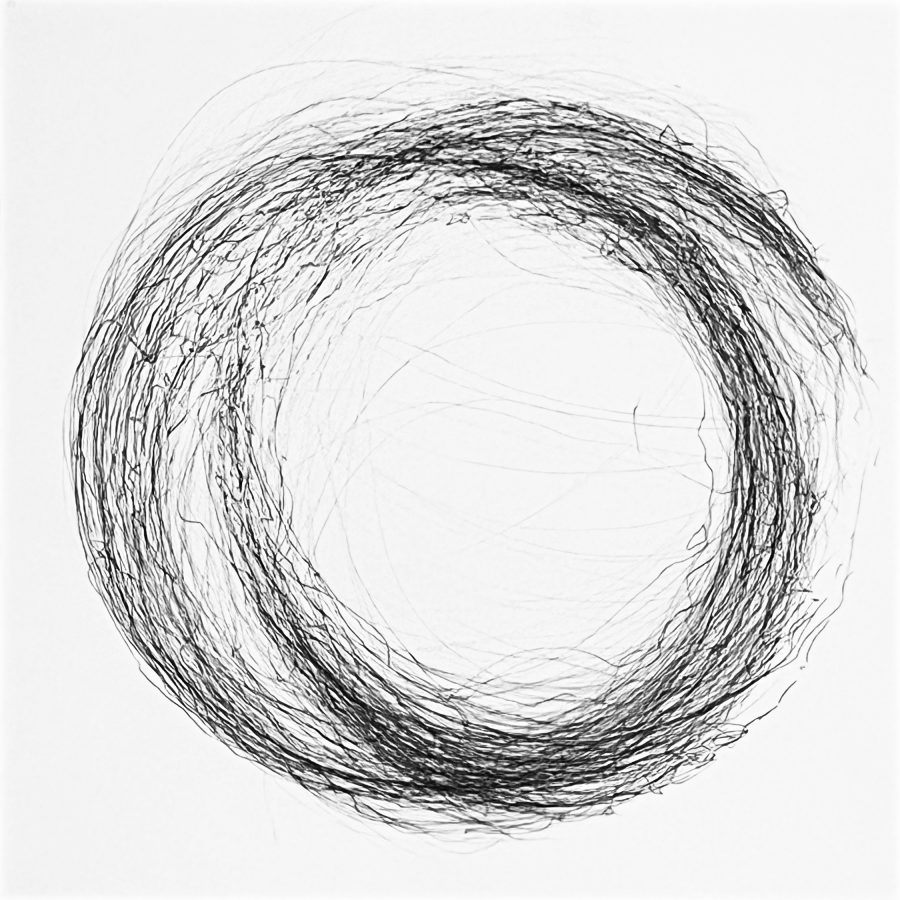
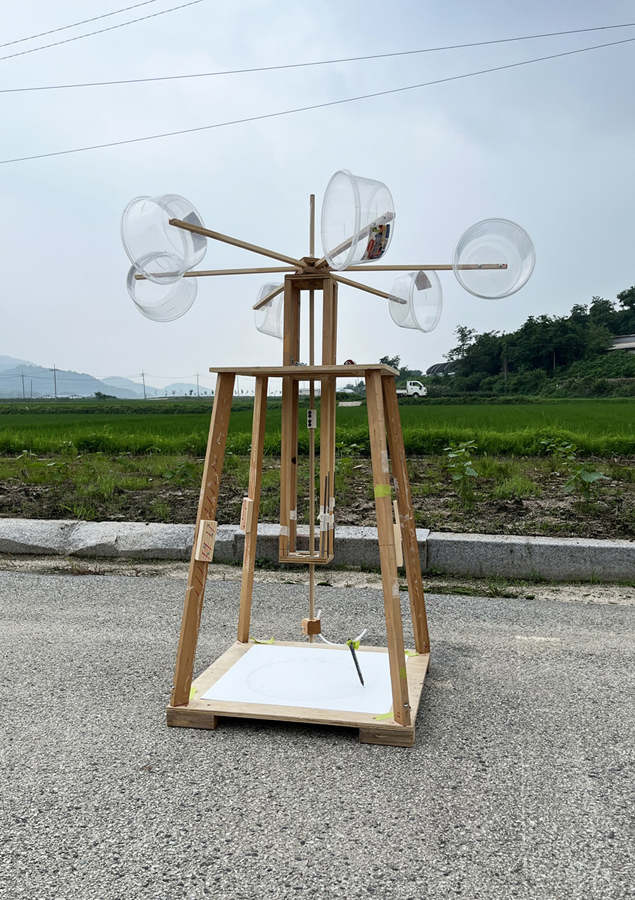
It occurred to me that the wind that flows freely across the border is shaped by the topography and may thereby carry traces of the land’s tragic history. Speculative to be sure, but the notion of divining the history of a place through something as fleeting and constant as the wind is compelling. What fellow artist David McDougall and I did was to deploy a number of wind-drawing machines in the border area of Cheorwon County that would channel that wind into drawings.
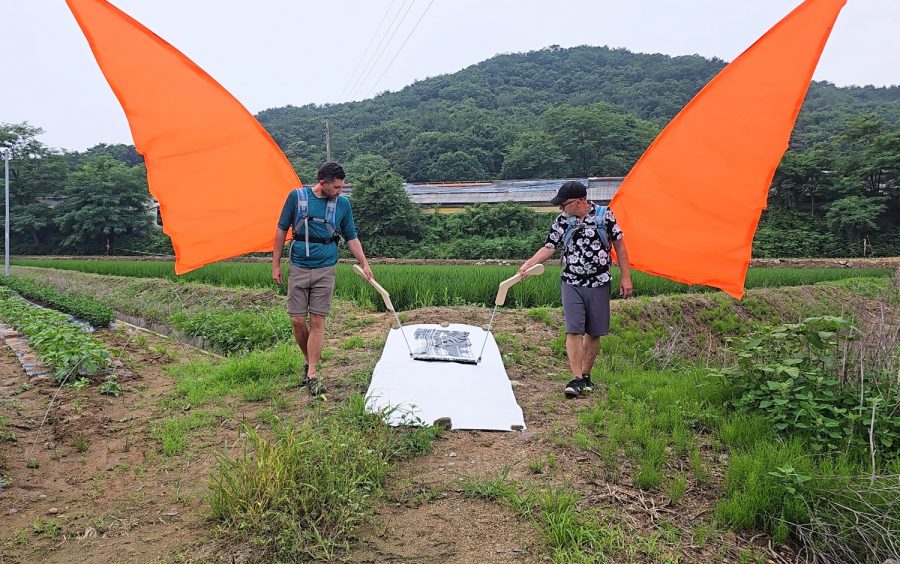
Three 10-foot ink drawings were created in the semi-autonomous method shown above. David built backpacks with sails that caught the wind and pushed us along slowly dragging a large paintbrush. The paper was pressed upon the landscape so that the resulting drawing is not only a record of the wind at that moment, but also a ‘rubbing’ of the earth.
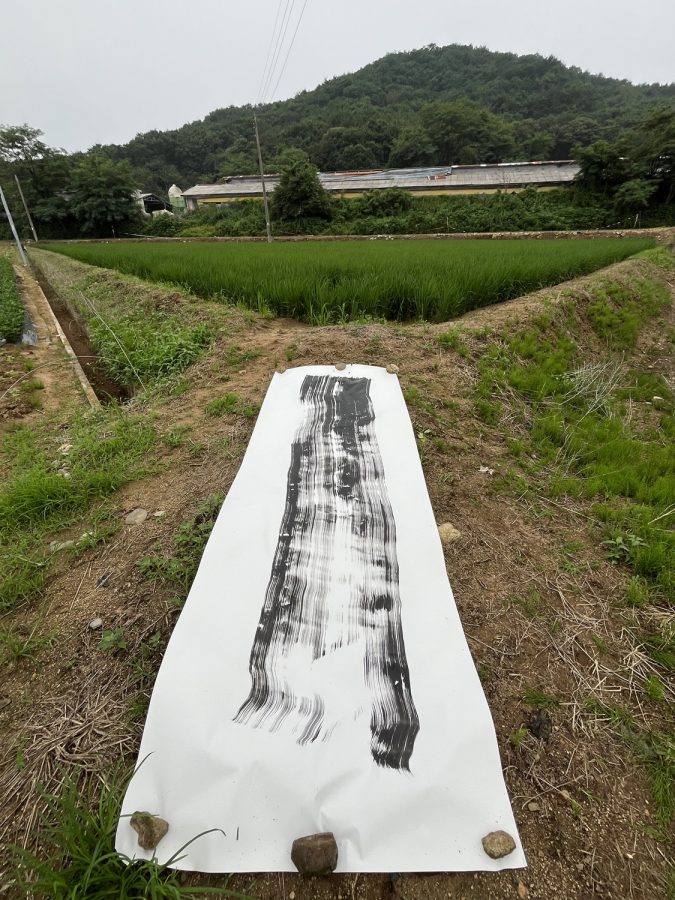
Drawings were also created using the fully autonomous mechanisms first developed in Ottawa. Interestingly, and perhaps not surprisingly, the wind-drawings created in “the land of the morning calm” were of a very different character than those made back home. The wind in Cheorwon County is gentle and changeable. It flows over the border, slowly across the rice fields, and at times just stops – no wind at all. A number of drawings reflect this: a loose tangle of lines that speak to the lankiness of the wind, the flatness of the fields, and the slow pace of rural life. Occasionally, the wind picks up dramatically, perhaps reflecting the ever-looming threat posed by North Korea.
Ultimately, what we read in the lines of these drawings may be our own reflections on the tragedy of war. Still, the drawings have indeed been created by the winds that cross the DMZ, which lends our supposition credence and an aspect of the real that cannot easily be dismissed.